Beyond Beautiful: Nature, Nurture and the Wider Potential of Interior Design
How do the spaces we create influence our health and wellbeing, and how might interior design contribute to the health of the wider living world?
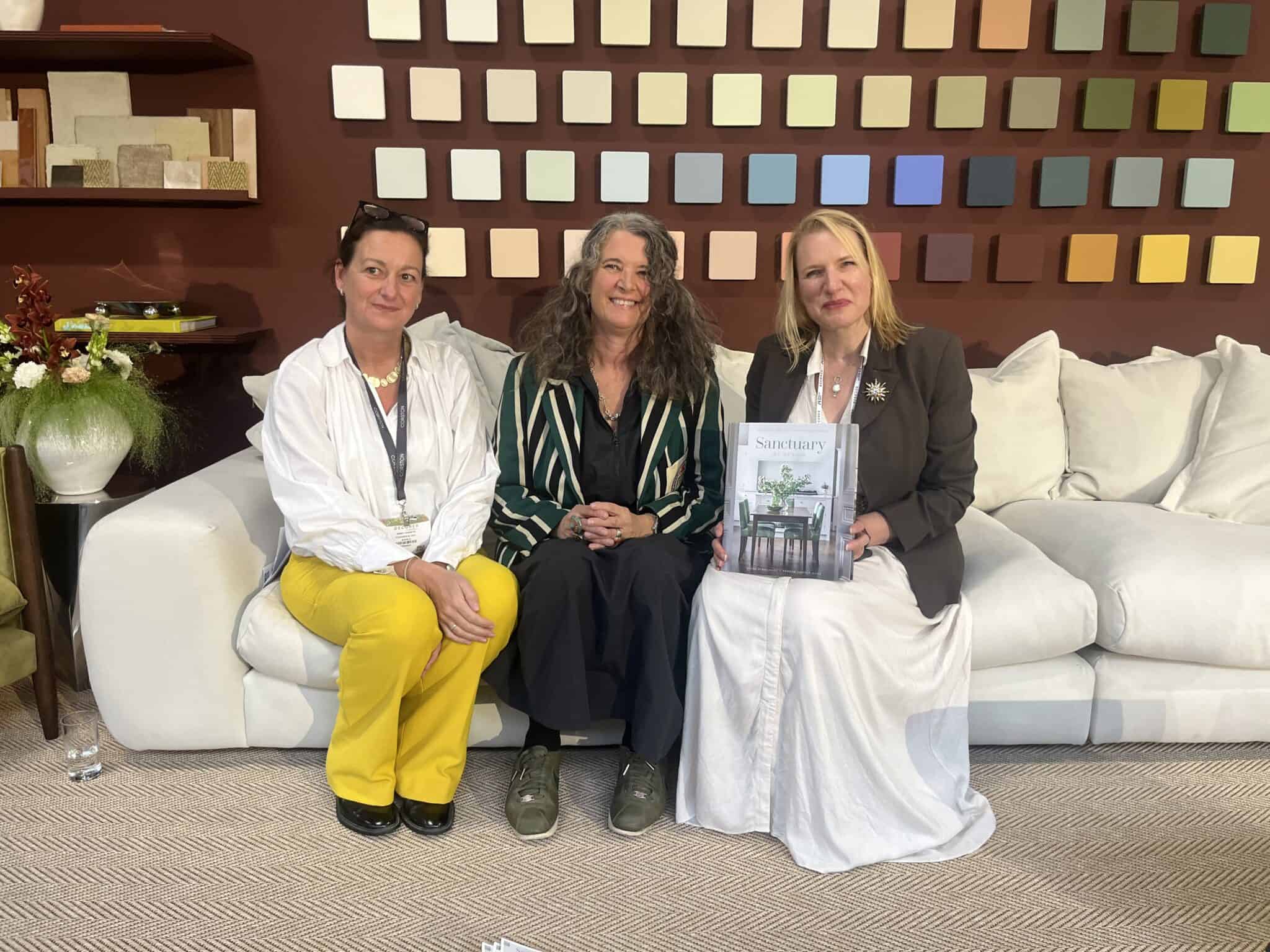
At Decorex, our co-founder Helen Gordon joined Kerryn Harper-Cuss and Mirry Christie from BABLE for Beyond Beautiful, a conversation exploring how neuroscience, healthier materials and regenerative thinking are changing our understanding of interior design.
We spend much of our lives indoors, surrounded by materials, light, colour, textures and spaces that influence how we feel and function. Yet interior design is still often judged primarily by how a space looks.
One of the central themes of our discussion was nature and nurture. How much do our surroundings influence us? How do we respond to the different needs of the people we’re designing for? And what does it mean to design in ways that nurture not only people, but the places and living systems we’re part of?
These questions are closely connected, and the conversation revealed just how much potential there is for interior design when we begin to look beyond aesthetics.
How our surroundings shape our experience
Kerryn Harper-Cuss explored the growing understanding of neuroaesthetics and how our brains and bodies respond to the environments around us.
Light was one example. Beyond allowing us to see, light influences our circadian rhythms, alertness, sleep and wellbeing. Our experience of a space is also shaped by sound, texture, colour, proportion and atmosphere.
Drawing on themes from her book Sanctuary by Design, Kerryn highlighted how deeply personal our experience of interiors can be. A space that feels comfortable and restorative to one person may feel overwhelming or unsettling to another.
We don’t experience a room as a collection of individual design elements. We experience it as a whole, through our senses, our bodies and our emotions.
This raises an important question for designers: are we considering how people will actually experience the spaces we create, rather than simply how those spaces will look?
Understanding different needs
Mirry Christie brought another important perspective, particularly around neurodivergence and the different ways people respond to their environments.
The analogy of the ‘canary in the coal mine’ was particularly thought-provoking. People with heightened sensory sensitivities may notice or experience environmental conditions more acutely, drawing attention to aspects of our surroundings that can affect many of us.
Lighting, acoustics, materials and other sensory conditions can all influence how comfortable and supported someone feels in a space.
It reminds us that there is no universal experience of an interior. We need to understand the individuals we’re designing for, rather than assuming that what works for one person will work for everyone. Mirry also highlighted that relatively small changes can make a meaningful difference. Thoughtful lighting, better material choices and a greater awareness of sensory needs are all places to begin.
We don’t have to change everything at once, but we do need to become more curious and informed about the consequences of our decisions.
Nature, nurture and regenerative thinking
My contribution to the discussion explored regenerative thinking and why I believe we need to begin with a more fundamental question: why do we design?
At Nested Living, our purpose is Design for Life — designing in service of life.
Through my studies in regeneration, I’ve come to understand how much our thinking has been shaped by seeing ourselves as separate from nature, rather than recognising that we’re part of it.
We have become very good at understanding things by breaking them down into separate parts. In interior design, we often discuss sustainability, biophilia, circularity, health and wellbeing as individual considerations. Each brings valuable knowledge, but none exists in isolation.
Regenerative thinking begins by understanding the whole: the relationships between people, buildings, materials, communities, ecosystems and the places they’re part of. This brings me back to nature and nurture. When we talk about nature, we often mean the natural world around us. But nature also describes the inherent character of something, the nature of a person, the nature of a place or the nature of a material.
Each has its own qualities, relationships, history and potential.
Nurture is about how we care for and support that potential. How do the environments we create support people as their lives change? How do we work with the particular character of a place rather than impose a predetermined solution? And how might our decisions contribute to the continuing health of the wider living systems we’re part of? For me, this is where regenerative design becomes particularly interesting.
It’s not another approach to add to a list of sustainability measures. It changes the questions we ask and how we approach the design process itself.
Rather than beginning with what we want to create, we begin by understanding what already exists, the relationships involved and what potential might be developed.
Materials: understanding more than what we see
Materials were another important part of our conversation, connecting sensory experience with human health, ecological health and our relationship with nature. Natural materials can bring richness, variation, texture and character to a space. The grain of timber, the feel of stone, the softness of natural fibres and the way these interact with light all contribute to the atmosphere we experience.
But understanding materials needs to go much deeper than appearance or touch. Where have they come from? How were they grown, extracted or manufactured? What chemicals, adhesives or finishes have been added? How might they affect indoor air quality? And what happens to them when an interior is changed or replaced? Natural doesn’t automatically mean healthy, just as a material’s environmental credentials don’t necessarily tell us everything about its effects on people or ecosystems.
At Nested Living, bringing design and making together in our Oxfordshire studio and workshop gives us greater control over these decisions.
We consider the composition of substrates, adhesives and finishes, use glueless construction and mechanical fixings, and design furniture and joinery with longevity, repair and future adaptation in mind. We also consider what already exists before introducing something new. Understanding provenance helps us recognise materials as more than commodities. They have origins, relationships and stories, as well as physical properties.
It also encourages us to think about the particular resources, knowledge and skills that exist within a place — an important part of bioregional thinking.
And it raises the question of reciprocity. We draw on nature for timber, stone, fibres and countless other resources, but how often do we ask what we contribute in return?
Can our decisions support the people, landscapes and ecosystems from which those resources come? Can we retain and make better use of what already exists, while creating opportunities for local skills and knowledge to develop?
Circularity and reducing harm are essential, but regenerative thinking invites us to consider our positive contribution as well.
Small changes, bigger questions
One of the most encouraging threads running through the discussion was that designers have opportunities to make a difference at many levels.
Sometimes that begins with relatively small decisions: reconsidering lighting, understanding a client’s sensory needs, questioning the chemistry of a material, asking a supplier about provenance or choosing to retain something rather than replace it.
These decisions matter. But there is also an opportunity to look more deeply at how we understand the purpose of design.
Neuroaesthetics helps us understand how environments affect our brains and bodies. Greater awareness of neurodivergence encourages us to recognise the diversity of human experience. Materials knowledge reveals the wider consequences of what we specify and how we make things.
Regenerative thinking helps us see the relationships between these considerations and understand them as part of a larger whole.
People change, needs evolve, materials age and places develop. Rather than creating interiors that are fixed at a particular moment in time, we can think about how they might adapt, continue to support life and remain valuable over time.
For us, that’s where the wider potential of interior design lies. Not simply in creating spaces that are beautiful, functional or even less harmful, important though these things are, but in understanding how our work can contribute to the health, vitality and ongoing development of people and places.
Perhaps the question is no longer simply what do we want to design, but what could our design help make possible?
That’s the thinking behind Design for Life, and why we believe interior design has a much greater role to play than we often recognise.
Thank you to Kerryn Harper-Cuss for guiding the conversation, to Mirry Christie for sharing her insights, and to Decorex for bringing us together to explore these questions.